
Dependable Chain Link Fencing for Mesquite Homes and Commercial Sites
Galvanized and vinyl-coated chain link fence installation across Mesquite and East Dallas, for residential yards, pet enclosures, and commercial security perimeters, with free estimates on every job.
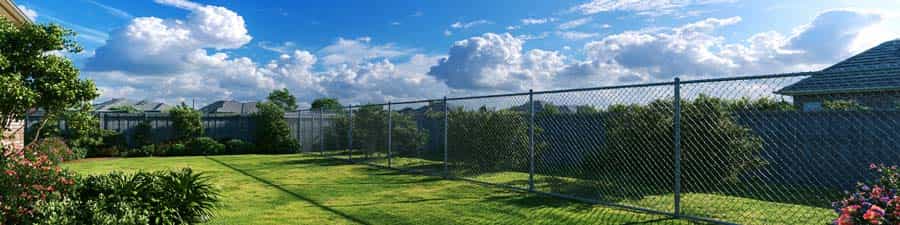
Chain Link Does What Other Fence Materials Cannot
Chain link is the most straightforward fence in the market — and in the right application, it’s also the most effective. No other residential or commercial fence material combines long service life, wind resistance, low maintenance, and cost-effectiveness in the same package.
In Mesquite and across East Dallas, chain link is the practical choice for homeowners who need a fence that works rather than one that makes a statement. It’s the material of choice for pet enclosures, side yards, rear property lines, and any situation where function is the priority. It’s also the dominant material for commercial security perimeters, construction site enclosures, and institutional facilities — for the same reasons it works in residential applications, scaled up.
Chain link fencing in the Mesquite market is available in two primary finishes: galvanized steel, which provides strong corrosion resistance without a color coating, and vinyl-coated, which adds a layer of color over the galvanized wire for improved appearance and an additional barrier against surface rust. Both perform well in the North Texas climate. Vinyl-coated chain link is the more common choice for residential applications where the fence is visible from the street or neighboring properties. Galvanized is standard for commercial and utility installations where appearance is secondary to performance and cost.
One characteristic of chain link that surprises some homeowners: it’s among the most wind-resistant fence types available. Because air moves through the fabric rather than pushing against a solid surface, chain link handles severe storm events far better than wood privacy panels. In a market where summer storms regularly push sustained winds above 40 mph across the Mesquite area, that’s a real advantage.
From the Backyard to the Commercial Perimeter
Residential Yards, Commercial Sites and the Options in Between
For residential installations in Mesquite, the most common chain link configurations break down by application:
- 4-foot height for front yard and side yard enclosures where a visual boundary matters more than full containment
- 5-foot or 6-foot height for rear yard installations, particularly where pets are a factor
- 6-foot or taller for dedicated pet enclosures or any application where containment is the primary goal
Gauge selection matters more than most homeowners realize at the estimate stage. Chain link fabric runs from 9-gauge (heaviest) to 12.5-gauge (lightest). For residential applications, 11-gauge or 11.5-gauge is the standard — it provides a solid balance of strength, durability, and cost without the overkill of commercial-grade wire. For commercial security perimeters or high-traffic installations, 9-gauge fabric with heavier posts and hardware is the right specification.
Privacy Slats and Windscreens
The most common objection to chain link is the lack of visual privacy. Two add-on options address this without replacing the fence entirely.
Privacy slats are vinyl strips woven vertically through the chain link fabric. They block most direct sightlines while keeping the structural integrity of the fence intact. Available in multiple colors, slats can be installed during the original fence construction or added to an existing chain link fence at any point. The result is a fence that reads more like a solid privacy fence from a distance while retaining all the structural advantages of chain link.
Windscreen fabric clips to the exterior of the fence and provides both visual screening and wind reduction through the fence line. It’s widely used for sports courts, construction sites, pool equipment areas, and rear yard installations where cutting wind exposure is as important as the privacy benefit.
Commercial Chain Link Across the Mesquite Area
For commercial applications, chain link is the most cost-effective security perimeter option in the market. It’s specified for construction site enclosures, parking lot perimeters, equipment yards, utility facilities, and institutional properties across Mesquite and the surrounding East Dallas communities. Commercial installations use heavier gauge fabric, larger post diameters, and tighter post spacing than residential work. Barbed wire or razor wire topping is available for security-critical applications.
Commercial fencing covers the full range of commercial chain link specifications and applications available in the Mesquite area.
Installation on Uneven Terrain
Chain link is one of the more forgiving fence types when it comes to grade changes. The fabric can be tensioned to follow a gradual slope continuously, and the bottom of the fence can be pulled tight and staked to minimize gaps at ground level. For steeper terrain, a stepped installation — level sections that drop incrementally with the slope — is the more appropriate method and produces a cleaner finished appearance.
Fence repair is available for existing chain link installations with damaged fabric, bent posts, or failing tension hardware throughout Mesquite and the surrounding service area.
Every chain link estimate is free, covers residential and commercial applications, and is based on a real look at the property before any number is put on the project.
Common Questions About Chain Link Fencing in Mesquite
How long does a chain link fence last?
A galvanized chain link fence installed with proper post depth and tensioning typically lasts 20 to 30 years in a residential setting. Vinyl-coated chain link performs similarly, with the added benefit of improved appearance and some additional protection against surface corrosion. The posts and tension hardware often outlast the fabric itself, which means a well-maintained chain link installation may only need fabric replacement rather than a full fence rebuild over its service life.
Can chain link fencing be made more private?
Yes. Privacy slats woven vertically through the chain link fabric block most direct sightlines and are available in multiple colors to complement the fence finish. Windscreen fabric is a second option, clipping to the exterior of the fence to provide both visual privacy and wind reduction. Both can be added at the time of original installation or retrofitted to an existing chain link fence at any point. Neither option compromises the structural performance of the fence.
What gauge chain link is best for a residential installation in Mesquite?
For most residential applications, 11-gauge or 11.5-gauge chain link fabric is the standard. It provides a strong balance of durability and cost that suits typical yard, pet enclosure, and property line applications. Lighter gauges — 12.5 and above — are better suited to temporary or low-demand installations. Heavier gauges, from 9 to 11, are appropriate for commercial applications, high-security perimeters, or any installation where the fence will see significant physical stress over time.
Is chain link fencing permitted in HOA communities in Mesquite?
It depends on the HOA’s CC&Rs. Many HOAs restrict or prohibit chain link fencing in front or side yards visible from the street but allow it in rear yards that are screened from view. Some HOAs prohibit chain link entirely and require wood, vinyl, or ornamental fencing throughout the property. Reviewing the HOA’s governing documents before selecting chain link is always the right first step, and we factor any known HOA restrictions into the estimate conversation.
Can chain link fencing be installed on a sloped yard?
Yes. Chain link is one of the more adaptable fence types for uneven terrain. On gradual slopes, the fabric can be tensioned continuously to follow the grade without leaving significant gaps at the ground line. On steeper grades, a stepped installation — level fence sections that drop incrementally with the slope — produces a cleaner result and is the more appropriate method. The right approach depends on the degree and consistency of the slope and is assessed during the on-site estimate.