
Fence Questions Answered for Mesquite and East Dallas Homeowners
Common questions about fence installation, repair, materials, permits, storm damage, and specialty services across Mesquite, Forney, and East Dallas. Full answers below, organized by topic. For questions specific to a particular service, each service page includes its own detailed FAQ section.
Getting Started
Do I need a permit to install a fence in Mesquite, Texas?
Mesquite requires a permit for most residential fence installations, particularly for fences above certain height thresholds or those installed along street-facing property lines. Requirements can also vary based on HOA community status or planned development designation. Confirming the specific requirements with the City of Mesquite Building and Inspections Department before installation begins is always the right approach. For neighboring cities in our service area — Forney, Balch Springs, Seagoville, Terrell, and Heath — each municipality has its own permit requirements, which we review as part of every estimate.
How long does fence installation typically take?
Most residential fence installations in the Mesquite area take one to two days from post-setting to completed board or panel installation. The timeline depends on the linear footage, whether old fence removal is included, and how long concrete-set posts need to cure before rails and boards are attached. Larger projects or installations requiring permits may extend the timeline. Gate installations and automated gate systems add one to two days depending on the complexity of the operator and access control setup.
What information should I have ready when requesting a fence estimate?
The most useful information for a fence estimate is the approximate linear footage needed or the dimensions of the yard, the fence material you’re considering, the height you want, and whether old fence removal is part of the project. If your property is in an HOA community, knowing your HOA’s fence requirements ahead of time saves a step. If the project involves storm damage and an insurance claim, having your policy information and any adjuster communications available helps the process move faster. None of this is required before calling — the on-site visit covers all of it.
Can I get a fence estimate without being home?
In most cases, yes. If the fence is accessible from the exterior of the property, the estimator can measure and assess the project without requiring interior access. For projects involving a backyard fence line where access requires going through the home or a locked gate, being home or leaving access available makes the estimate more thorough. A quick phone conversation before the visit covers which scenario applies to your property.
Materials and Choices
Is cedar or pine better for a fence in North Texas?
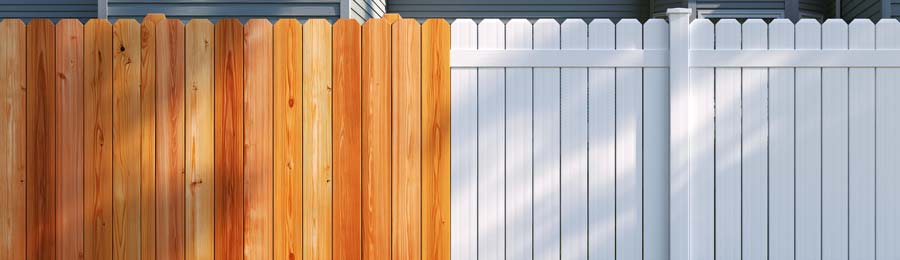
Cedar is the stronger choice for most North Texas fence installations. Cedar contains natural oils that resist moisture, insects, and rot more effectively than pine without relying entirely on chemical treatment. In the Dallas area climate — with its combination of summer heat, seasonal humidity, and occasional freeze-thaw conditions — cedar consistently outlasts pine by several years under the same maintenance schedule. Pine is less expensive upfront but requires more frequent staining and board replacement to achieve comparable longevity. Wood fence installation
How long do different fence materials last in the Texas climate?
Properly maintained cedar fencing typically lasts 15 to 20 years in North Texas. Vinyl fencing from reputable manufacturers carries 20 to 30-year warranties and often lasts longer with minimal maintenance. Chain link fencing lasts 20 to 30 years under normal residential conditions. Ornamental iron and aluminum fencing, with proper finish maintenance, can last several decades. In every case, post depth, concrete setting, and ongoing maintenance are the primary variables that determine whether a fence reaches the top or bottom of its potential lifespan.
What fence styles are commonly approved by HOAs in the Dallas area?
HOA fence requirements vary significantly by community, but the most commonly approved materials in established Dallas-area HOAs are cedar privacy fencing for rear yards and ornamental iron or aluminum for front yard and visible perimeter applications. Vinyl fencing is increasingly approved in newer communities that specify low-maintenance materials. Chain link is rarely approved in visible areas within HOA communities but may be permitted in rear yards or utility areas. Confirming the specific requirements in your HOA’s CC&Rs before selecting a material is always the right first step.
What is the difference between wrought iron and aluminum ornamental fencing?
True wrought iron is heavier, stronger, and carries more traditional visual weight than aluminum. It’s the preferred material for heavy-duty residential and commercial applications where structural mass matters, but it requires more attention to the finish over time to prevent rust. Aluminum ornamental fencing achieves a nearly identical appearance at a lighter weight, with better inherent rust resistance and lower long-term maintenance requirements. For most residential front-yard and pool enclosure applications in the Mesquite area, aluminum is the more practical choice. Wrought iron fence installation
Is vinyl fencing a good option for the Texas climate?
Yes. Quality vinyl fencing is manufactured with UV inhibitors that prevent the chalking, brittleness, and color fading that can affect lower-grade vinyl products in direct sun. Unlike wood, vinyl does not rot, absorb moisture, or require periodic staining to maintain structural integrity. It performs well in North Texas heat and holds up in high-wind events because the panels flex under load rather than resisting rigidly. The main tradeoff versus wood is higher upfront cost, which the reduced maintenance requirement tends to offset over a 20 to 25-year ownership period. Vinyl fence installation
Repair and Maintenance
Can a damaged fence be repaired instead of fully replaced?
In many cases, yes. Targeted repair is the right call when damage is isolated to specific boards, posts, or sections and the surrounding structure is still sound. Full replacement becomes more practical when post failure is present at multiple locations, more than a third of the fence sections are compromised, or the fence has reached an age where repairs address symptoms rather than the underlying condition of the materials. A free on-site estimate covers both options with pricing on each path before any decision is required. Fence repair
How often should a wood fence be stained in North Texas?
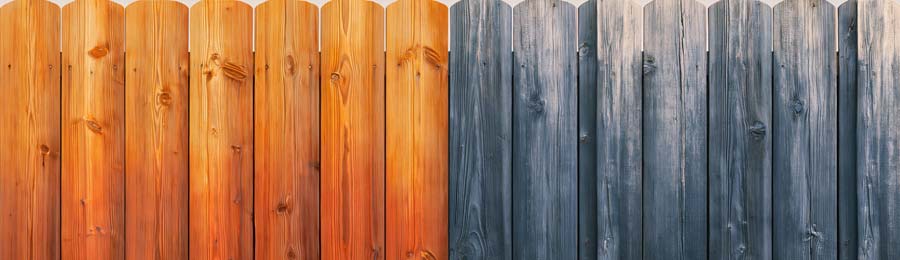
Most North Texas wood fences benefit from staining every two to three years. The practical test: after a rainfall, check whether water beads on the surface of the boards. If water absorbs quickly rather than beading, the fence is ready for treatment. Visible graying and fading are the other reliable indicators. In the Texas climate, where UV exposure and humidity swings accelerate wood degradation, staining on this schedule is what allows a cedar fence to reach its full 15 to 20-year lifespan. Fence staining and sealing
What causes fences to lean or fall over?
Post failure at or below the soil line is the most common cause. Wood posts are vulnerable to rot in the zone where they transition from soil to air, particularly where drainage is poor around the base. In Dallas County clay soil, seasonal expansion and contraction also work posts out of plumb over time, particularly posts set without adequate depth or concrete. High-wind events and vehicle contact are the other frequent causes of leaning or downed fence sections. The visible symptom is always the leaning section; the actual problem is almost always the post beneath it.
How do I know whether my fence needs repair or full replacement?
Repair is the practical path when damage is isolated, posts are structurally sound, and the fence is under 12 to 15 years old with the rest of the structure in reasonable condition. Replacement makes more sense when post failure is widespread, more than a third of the fence shows significant damage, or the fence has reached an age where repair costs approach the cost of starting fresh. When the answer isn’t clear from a visual inspection — which is common — a free on-site estimate that covers both options with real pricing is the most reliable way to decide. Fence repair
Storm Damage and Insurance
Does homeowner's insurance cover storm damage to a fence?
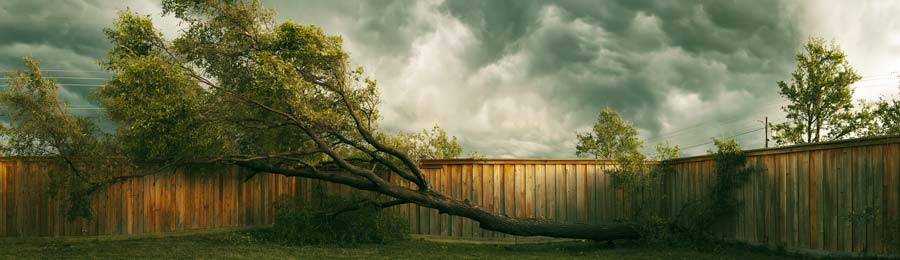
Most standard homeowner’s insurance policies cover fence damage caused by named storm perils — wind, hail, lightning, and falling trees are the most common covered events. Damage from gradual deterioration or maintenance neglect is generally not covered. Coverage is typically subject to the policy deductible and paid on either an actual cash value or replacement cost basis depending on the specific policy. Documenting the damage with photographs immediately after the storm, before any temporary repairs, is the most important first step in the claim process.
What should I do immediately after a storm damages my fence?
Photograph the damage thoroughly before touching anything — the fallen panels, any debris that caused the damage, and the post condition at ground level. Once documentation is complete, a temporary repair to restore security or containment is reasonable and typically covered under most policies as an emergency protective measure. Keep all receipts for materials used in any temporary repair. Then contact your insurance carrier to report the claim and request an adjuster visit. Getting a professional written estimate before or immediately after the adjuster visit helps ensure the claim reflects current replacement costs in this market. Storm damage fence replacement
How do I document storm damage to my fence for an insurance claim?
The documentation package most insurance carriers require includes photographs of the damage taken before any repairs, a professional written estimate for repair or replacement, and documentation connecting the damage to the specific storm event. Weather service records for the date and location are useful supporting documentation. Some carriers also request a signed statement from the homeowner describing the circumstances. We provide written estimates promptly after every on-site visit in a format that meets the documentation standards most carriers expect.
Specialty Services
How much do automatic driveway gates cost in the Dallas area?
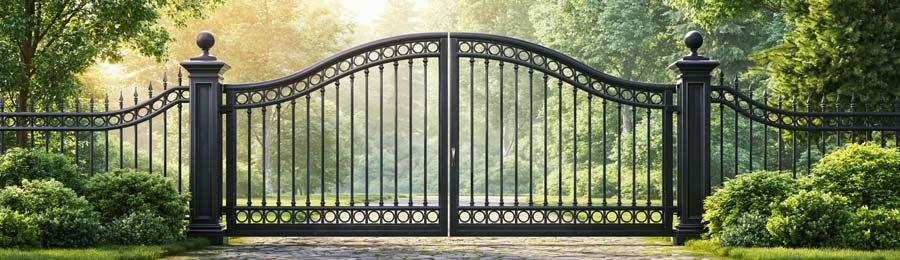
Automatic driveway gate systems in the Dallas area typically range from $2,500 to $8,000 or more depending on gate size, material, operator type, and whether access control components such as a keypad or intercom are included. Single swing gates with a basic operator are at the lower end of that range. Dual swing or large slide gates with solar power and integrated access control fall toward the higher end. These are general market estimates — actual pricing requires an on-site assessment of the driveway layout, post conditions, and power access before any number is confirmed. Automatic driveway gates
Can an existing manual gate be converted to automatic?
In many cases, yes. If the existing gate panel is structurally sound and the posts are set to adequate depth in concrete, an operator can be added without replacing the gate. The key variable is post depth — operator torque loads are significantly higher than what a manual gate exerts, and posts sufficient for manual use sometimes need to be reset before an operator is mounted. A site visit to assess the existing gate structure is the most reliable way to determine whether conversion is practical or whether new posts are the better starting point.
What type of fencing is most appropriate for commercial properties?
The right material depends on the application. Chain link is the most widely specified commercial fencing for security perimeters, equipment yards, construction sites, and industrial properties — durable, cost-effective, and appropriate for most applications where function outweighs aesthetics. Ornamental iron and aluminum are the standard for business frontages and institutional campuses where appearance is part of the requirement alongside security. For commercial applications requiring both, ornamental fencing with security features such as tighter picket spacing or anti-climb finials is available. Commercial fencing
Can a custom gate be matched to an existing fence?
Yes, and matching is one of the primary reasons homeowners choose custom fabrication over a stock gate panel. The most important variables for an accurate match are the fence material, profile dimensions, and finish or color. For wood fences, matching the lumber species, board width, and spacing is usually straightforward. For ornamental iron, matching the picket profile and rail dimensions allows the gate to read as part of the original installation. An on-site assessment of the existing fence is the most reliable starting point for any gate matching project. Custom gates
Still have a question? We can answer it on-site.
Every fence estimate is free, includes a full look at the property, and gives you the information you need to make a decision — on repair, replacement, material, or any other fence question specific to your property.