
Low-Maintenance Vinyl Fencing for Mesquite Homeowners Who Want It Done Once
Privacy, semi-privacy, and picket vinyl fence installation across Mesquite and East Dallas, built to handle North Texas heat and high winds without rot, splinters, or a recurring staining cycle.
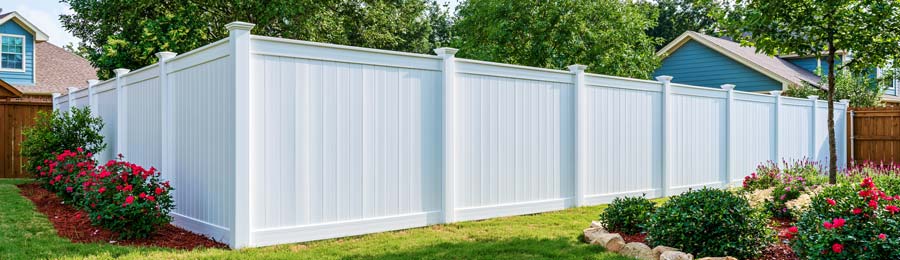
Why Vinyl Holds Up Where Wood Wears Down
Most of the wood fences being replaced in Mesquite right now are reaching end-of-life after 15 to 20 years. The homeowners replacing them are doing the math: another wood fence means another staining cycle starting in year two, board repairs around year eight, post failures in the early teens, and a full replacement again in another 15 years. Vinyl changes that calculation.
Vinyl fencing doesn’t rot, splinter, absorb moisture, or require periodic staining to stay structurally sound. The material — extruded PVC with UV inhibitors built into the compound — is engineered to handle the specific stresses of the Texas climate: intense summer UV that bleaches and dries wood, the humidity swings of a North Texas wet season, and the freeze-thaw conditions that come with a Texas winter.
Heat and UV Performance
The UV inhibitors in quality vinyl fencing prevent the chalking, brittleness, and color fading that earlier-generation vinyl products were known for. In direct North Texas sun, a fence from a reputable manufacturer maintains its color and structural integrity year after year without homeowner intervention. The finish isn’t a coating that can peel or chip — it’s part of the material itself, consistent through the full thickness of the board.
Wind Performance in the Mesquite Market
Vinyl fence panels are engineered to flex under wind load rather than resist it rigidly. That flexibility, combined with proper post depth and concrete setting, gives vinyl strong performance in high-wind events. Some vinyl privacy fence systems also allow a small amount of air movement through the panel construction, reducing load on the posts during severe gusts. In Mesquite — where summer storms regularly push sustained winds above 40 mph — post depth and concrete setting are the most important wind-resistance variables regardless of material, and both are accounted for on every installation.
Vinyl Fence Styles Built for Mesquite Neighborhoods
Style Options, Colors and the Long-Term Cost Picture
Privacy, Semi-Privacy and Picket Styles
Vinyl fencing in the Mesquite market is available in three primary styles:
- Privacy: Solid panels with no sightlines between yards — the direct functional equivalent of a wood privacy fence and the most common choice for rear yard installations.
- Semi-privacy: Spaced pickets that reduce direct sightlines while allowing airflow through the fence line. A practical option for side yards or any application where full enclosure isn’t the goal.
- Picket: Open spacing with a traditional residential appearance. Common for front yard and street-facing applications where the fence defines the property line without enclosing the yard.
Color Options and HOA Compatibility
Standard residential vinyl colors are white, almond, tan, and gray, with other options available by order from most manufacturers. White is by far the most common choice in Mesquite neighborhoods.
For homeowners in HOA communities, vinyl is often the preferred or required material. It maintains a consistent appearance across the neighborhood over time without the color variation that comes from different homeowners staining wood fences at different intervals and with different products. HOA requirements for fence material, color, and style should always be confirmed before ordering, and we review any known restrictions as part of the estimate conversation.
Vinyl vs. Wood: The Long-Term Cost Picture
Vinyl fencing costs more upfront than a comparable wood fence — typically 20 to 40 percent more per linear foot installed, depending on fence style and material grade. The long-term picture is different. A vinyl fence requires no staining, no sealing, minimal repairs, and carries a service life of 25 to 30 years or longer from quality manufacturers. When ongoing wood maintenance costs and the earlier replacement timeline are factored in, the total cost of ownership over 25 years is often comparable between the two materials — and sometimes lower with vinyl.
The right choice depends on how long you plan to stay in the home and how much ongoing maintenance you’re prepared to manage. Both are legitimate considerations, and a free estimate covers both options so you can compare them on the same terms.
Wood fence installation remains a strong option for homeowners whose timeline or budget favors it. Fence repair is available for existing vinyl or wood fences with damage that doesn’t warrant full replacement.
Every vinyl fence estimate is free, on-site, and comes with no obligation.
Common Questions About Vinyl Fencing in Mesquite
Is vinyl fencing a good choice for the Texas heat?
Yes. Quality vinyl fencing is manufactured with UV inhibitors that prevent the chalking, brittleness, and color fading that can affect lower-grade vinyl products in direct sun. The Texas climate — with its combination of intense summer UV, temperature extremes, and seasonal humidity — is a known stress environment for fence materials, and reputable vinyl fence manufacturers engineer their products specifically for these conditions. The UV protection is built into the compound itself, not applied as a surface coating, which means it doesn’t wear away with exposure the way a paint or stain finish can.
How long does a vinyl fence last?
Vinyl fencing from reputable manufacturers typically carries warranties of 20 to 30 years, and the material itself can last considerably longer under normal conditions. Unlike wood, vinyl does not rot, absorb moisture, or require periodic protective treatment to maintain structural integrity. The primary maintenance required is occasional cleaning to remove surface dirt and mildew buildup. Under normal residential use in the North Texas climate, a properly installed vinyl fence is a long-term installation rather than a material with a fixed replacement cycle.
Does vinyl fencing hold up in high winds?
Vinyl fence panels are designed to flex rather than resist rigidly under wind load, which helps distribute force across the fence system rather than concentrating it at the posts. The most important factor in wind resistance for any fence — vinyl or otherwise — is post depth and concrete setting. Posts set to proper depth in concrete-filled holes perform significantly better in high-wind events than posts set in packed soil alone. Wind damage to vinyl fencing most commonly occurs when posts were not set to adequate depth, not because the panels themselves failed.
Is vinyl fencing more expensive than wood?
Vinyl typically costs 20 to 40 percent more per linear foot installed than a comparable wood fence, depending on the style and material grade. The upfront cost difference is real. Over a 25-year period, however, the total cost of ownership between vinyl and a maintained wood fence narrows considerably when wood maintenance costs — staining every two to three years, periodic board replacement, eventual post replacement — are accounted for. For homeowners planning to stay in the home long-term, the reduced maintenance burden of vinyl is a meaningful factor beyond the initial price comparison.
Can a damaged vinyl fence section be repaired, or does the whole section need replacement?
Individual vinyl fence panels, posts, and pickets can often be replaced without touching the rest of the fence. Because vinyl is manufactured in standardized sizes and profiles, matching replacement sections from the same manufacturer or a compatible product line is usually possible. The main complication with older vinyl installations is color matching — vinyl weathers and shifts slightly in color over years of UV exposure, and a new replacement section may not be an exact visual match to the existing fence. For extensive damage or older installations where color match is critical, full section or full fence replacement may produce a cleaner result.
How do you clean a vinyl fence?
Most vinyl fence cleaning can be done with a garden hose, a soft-bristle brush, and a mild soap-and-water solution. For mildew or organic staining — common on north-facing fence sections in the Mesquite area — a diluted white vinegar solution or a vinyl-safe cleaning product works without damaging the material. Avoid pressure washing at close range or with high-pressure nozzles, which can force water into post caps and panel joints. An annual cleaning is typically sufficient to keep a vinyl fence looking its best, and it takes considerably less time than a wood staining project.