
Ornamental Iron Fencing That Fits Mesquite Properties Inside and Out
Wrought iron and ornamental aluminum fence installation for Mesquite front yards, pool enclosures, and property perimeters, with powder-coated finishes built for the North Texas climate.
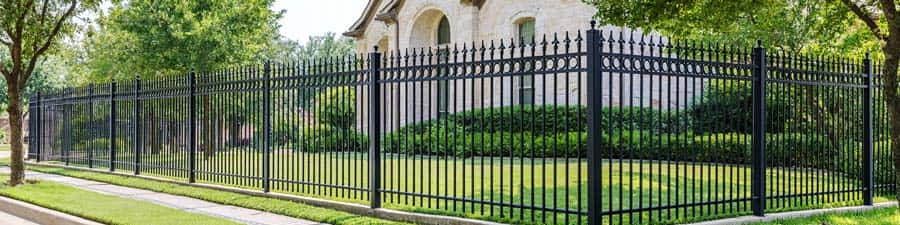
The Fence Material Chosen for How It Looks — and How Long It Lasts
Ornamental iron fencing is one of the few fence materials chosen primarily for how it looks. That’s not a limitation — it’s a recognition that homeowners who choose iron are thinking about permanence, curb appeal, and the specific character of their property. A cedar privacy fence keeps the yard enclosed. An ornamental iron fence makes a statement about the property itself.
In Mesquite, iron fencing is most commonly installed in three situations: along front property lines where visibility matters and a full privacy fence would feel out of place, around pool enclosures where code requires open-sight fencing that still meets safety requirements, and along property perimeters where the goal is something that will last decades without the maintenance cycle that wood demands.
Wrought Iron vs. Aluminum: Making the Right Call
True wrought iron is heavier, stronger, and carries a more traditional visual weight than aluminum. It’s the material of choice for heavy-duty residential applications and commercial installations where structural mass is part of the design intent. The tradeoff is maintenance — chips and scratches in the powder coat can allow rust to develop if left unaddressed.
Aluminum ornamental fencing achieves a nearly identical appearance at a lighter weight and with better inherent rust resistance. Because aluminum doesn’t oxidize the same way iron does, it holds up in the Texas climate with less maintenance intervention and at a lower cost per linear foot. For most residential front-yard and pool enclosure applications in Mesquite, aluminum is the practical choice. For commercial installations, heavy gates, or applications where structural mass matters — iron is the right call.
We cover this comparison on every estimate so the material decision is made deliberately, not by default.
Applications in the Mesquite Market
Front yard fencing is the most common ornamental iron application in established Mesquite neighborhoods. A 4-foot ornamental fence along the street-facing property line adds visual definition to the lot without closing off the front yard the way a wood privacy fence would. It works well with both older brick homes and newer construction.
Pool enclosures are the second most common application. Mesquite, like most Texas municipalities, requires pool fencing to meet specific height and gate-latching requirements to limit unsupervised access. Ornamental iron and aluminum satisfy those requirements while keeping sightlines open from the house to the pool area. We confirm local pool enclosure code requirements as part of every pool fence estimate.
Property perimeters come up less frequently but are worth noting for larger Mesquite lots where a homeowner wants something that communicates permanence. Iron or aluminum along the full perimeter — combined with a wood or vinyl privacy fence in the rear yard — is a common split approach in this market.
Custom iron gates and automatic driveway gates pair naturally with ornamental iron fence installations. A cohesive fence and gate system in the same material and finish line looks intentional in a way that mixed materials rarely do.
See custom gate options
Automatic driveway gates
Powder Coat Finishes That Stand Up to North Texas Seasons
What Keeps an Iron Fence Looking Good After Year Ten
The durability of any ornamental iron or aluminum fence comes down to two things: the quality of the installation and the integrity of the finish.
Powder coating is the standard protective finish for ornamental iron and aluminum fencing. Applied electrostatically and cured under heat, a quality powder coat resists chipping, fading, and moisture penetration far better than standard paint. In North Texas — where summer UV exposure is intense and seasonal temperature swings stress metal finishes — a properly applied powder coat is what separates a fence that looks good after ten years from one showing rust staining at year four.
Most ornamental iron and aluminum fencing comes in standard colors. Black and dark bronze are by far the most common in residential applications, with other colors available by order. Custom colors are an option for commercial applications where architectural or brand standards apply.
Maintenance in the Mesquite climate is straightforward:
- Annual inspection of the finish for chips, scratches, or early oxidation
- Prompt touch-up of any bare metal with a rust-inhibiting primer and color-matched finish coat
- Occasional cleaning with soap and water to clear surface buildup before it can work into the coating
Aluminum requires even less attention. Its natural oxidation resistance means longer intervals between finish inspections without risk of the underlying deterioration that iron requires owners to watch for.
Commercial fencing is available for larger ornamental iron and aluminum installations on Mesquite business properties and institutional facilities.
Every ornamental iron estimate is free, on-site, and carries no obligation.
Common Questions About Ornamental Iron Fencing in Mesquite, Texas
Is wrought iron or aluminum the better choice for a residential fence in Mesquite?
For most residential applications in Mesquite, aluminum ornamental fencing is the more practical choice. It achieves the same visual result as wrought iron at a lighter weight, with better inherent rust resistance and lower long-term maintenance requirements. True wrought iron makes sense for applications where structural mass matters — heavy driveway gates, commercial perimeter fencing, or installations where the traditional weight and feel of iron is part of the design intent. We cover both options on every estimate so the decision is based on your specific property and goals, not a default recommendation.
Does ornamental iron rust in the Texas climate?
It can, if the protective finish is compromised. Most ornamental iron fencing is powder-coated at the factory, and that finish provides strong resistance to moisture and oxidation under normal conditions. The risk comes from chips and scratches in the coating — bare metal exposed to North Texas humidity and rain will begin to oxidize. Annual inspection and prompt touch-up of any damaged areas is the most reliable way to prevent rust from developing. Aluminum avoids this concern almost entirely because the base material is naturally oxidation-resistant without depending on the integrity of the coating.
Can ornamental iron fencing be used as a pool enclosure in Mesquite?
Yes, and it’s one of the most common pool enclosure materials in the Mesquite area. Ornamental iron and aluminum satisfy the open-sight requirement that most Texas municipalities impose on pool fencing — the fence must restrict access without blocking the view from the house to the pool. Specific requirements for fence height, gate self-latching mechanisms, and gate swing direction vary by local code. We confirm the applicable Mesquite requirements as part of every pool enclosure estimate to ensure the installation meets code on the first inspection.
How long does an ornamental iron fence last?
A properly installed ornamental iron fence with routine finish maintenance can last several decades. The fence structure itself — posts, rails, and panels — does not degrade quickly under normal conditions. Longevity depends primarily on maintaining the powder coat finish to prevent rust from developing at the base metal. With annual inspections and prompt touch-up work, iron fencing is among the most durable residential fencing materials available. Aluminum, under the same conditions, performs similarly without the rust maintenance requirement.
Can ornamental iron fencing be installed on a sloped yard?
Yes. Iron and aluminum fencing can be installed on sloped terrain using one of two approaches: racking, where the fence panels are angled to follow the grade continuously, or stepping, where the fence is installed in level sections that drop incrementally with the slope. Racking works well for gradual, consistent grades. Stepping is more common for steeper terrain or when a more formal, geometric appearance is the goal. The right approach depends on the degree and consistency of the slope and the style of fence selected. Slope accommodation is assessed as part of every on-site estimate.