
Reliable Fence Repair Across Mesquite and the East Side
Board replacement, post re-setting, rail repair, and storm damage service for homeowners across Mesquite, Forney, and East Dallas, with free estimates before any commitment to repair or replacement.
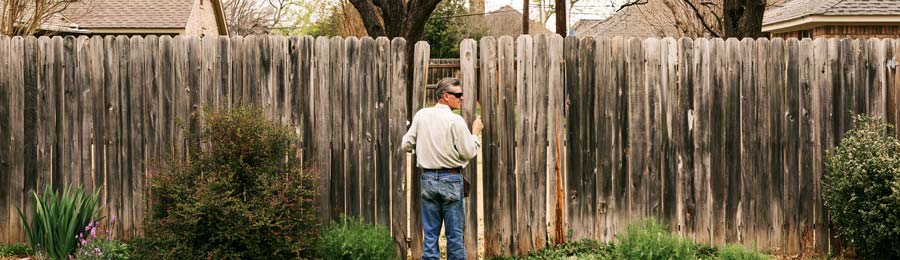
Most Fence Damage in Mesquite Is More Repairable Than It Looks
The first question most Mesquite homeowners ask when a fence section fails is whether they’re looking at a repair or a full replacement. In most cases — especially for fences under 15 years old with isolated damage — targeted repair is the faster, lower-cost path. The situations that genuinely require full replacement are specific, and a free on-site estimate is the most reliable way to know which situation you’re actually in before committing to either option.
Common Fence Problems in the Mesquite Area
The repair issues we see most often across Mesquite and East Dallas fall into four categories:
- Damaged or rotted boards: Individual boards that have split, checked, or softened structurally. This is the most common repair and frequently the simplest — boards can be replaced individually without disturbing the rest of the fence.
- Leaning or shifted sections: Usually caused by post failure at or below the soil line, where Dallas County clay expansion and seasonal moisture have worked the post out of plumb over time. The visible symptom is a leaning fence section; the actual problem is the post beneath it.
- Rail damage: Rails that have warped, cracked, or pulled away from the fence structure, leaving boards without adequate support. Rail repair often accompanies board replacement but can be addressed on its own when the posts are sound.
- Fallen or storm-damaged sections: Fence panels or runs taken down by high winds, falling trees, or vehicle impact. Storm damage often looks worse than it is structurally — a fallen section with sound posts is frequently a faster repair than homeowners expect.
When Repair Makes Sense and When Replacement Is the Right Call
Repair is the right path when damage is isolated to specific sections, posts are structurally sound with no significant rot at the soil line, and the fence is under 12 to 15 years old with the rest of the structure in reasonable condition.
Replacement is the better call when post failure is present across multiple sections, more than a third of the boards or panels show significant deterioration, storm damage has compromised the majority of the fence line, or the fence has reached the end of its service life and further repairs would address symptoms rather than the underlying condition of the materials.
When the answer isn’t obvious — which is common — the estimate visit resolves it. We assess the full fence line, not just the visible damage, and present both options with pricing before any work is scheduled.
The Repair Process, From Assessment to Finished Work
What to Expect When You Call for Fence Repair
The Assessment Comes First
Every fence repair starts with a free on-site estimate that covers the full fence line, not just the visible damage. Hidden post rot, subsurface movement, and rail damage behind intact boards are common findings that a visual assessment from the street misses entirely. Identifying them before work begins means the quote reflects the actual scope of repair rather than producing surprise additions mid-project.
The Repair Sequence
Post repairs come first. Everything above the post depends on what’s below it, and re-setting boards or rails on a failing post produces a repair that won’t hold. New posts are set in concrete at proper depth for Dallas-area clay soil before rails and boards are reattached. Board and rail replacement follows, with materials matched to the existing fence as closely as available stock allows. For cedar privacy fences — the most common repair material in the Mesquite market — a close match is standard. For older fences where the original lumber grade is no longer available, the nearest equivalent is identified and noted in the estimate before work begins.
Storm Damage and Insurance Coordination
If your fence was damaged in a storm, documenting the damage before any temporary repairs are made is the most important first step for insurance purposes. Photographs taken immediately after the event — before anything is moved or patched — are what an insurance adjuster will ask for first. We provide a written estimate promptly after the on-site visit, which is typically the documentation insurers require alongside the photographs.
For homeowners working through the full insurance claim process, storm damage fence replacement covers the insurance coordination process and replacement options in detail.
Serving Mesquite and the Surrounding Area
Fence repair service covers all of Mesquite and extends into Forney, Balch Springs, Seagoville, Terrell, and Heath. The Forney service area page covers fence repair and installation for Forney homeowners with the same free estimate process as the primary Mesquite market.
Fence staining and sealing is available as a follow-on service for wood fences after repair work is complete and the new lumber has had time to settle and dry.
Every fence repair estimate is free, covers the full fence line, and puts both repair and replacement options on the table before any decision is required.
Common Questions About Fence Repair in Mesquite
Can a damaged fence be repaired instead of fully replaced?
In many cases, yes — and repair is often the right call when the damage is localized. Common repairs include replacing individual damaged boards or pickets, resetting or replacing posts that have shifted or rotted at the base, repairing rails that have warped or pulled away from the fence structure, and rebuilding specific sections while leaving the rest of the fence intact. Full replacement becomes the more practical option when structural damage is widespread across multiple runs, when post failure is present at several locations along the fence line, or when the fence has reached an age where repairs would be addressing the symptoms of overall deterioration rather than isolated damage.
How much does fence repair cost in Mesquite?
Fence repair costs in the Mesquite area vary significantly based on the type and extent of damage. Replacing a small number of individual boards typically runs $100 to $300. Resetting a leaning post — including concrete removal and re-setting — generally costs $150 to $400 per post depending on site conditions. Full section replacements range from $300 to $700 or more per section depending on material and linear footage. These are general market estimates. Actual pricing for any specific project requires an on-site assessment of the fence condition before a number is put on it, and that estimate is always free.
How do I know if my fence needs repair or full replacement?
The clearest indicators that repair is the right path: damage is isolated to a few boards or one or two sections, the posts are still plumb and structurally sound, and the fence is under 12 to 15 years old with the rest of the structure in reasonable condition. The clearest indicators that replacement makes more sense: post failure is present at multiple locations, more than a third of the fence sections show significant damage, or the fence is old enough that the repair cost would approach or exceed the cost of a new fence that would last another 15 to 20 years. For fences that fall between these two clear categories, the on-site estimate is the most reliable way to make the call — we present both options with pricing so the decision is yours to make with the full picture in front of you.
How quickly can fence repair be scheduled?
Scheduling depends on current workload and the severity of the damage. For storm damage situations where the fence is down and security or containment is an immediate concern, we prioritize the estimate visit to assess the situation as quickly as possible. For non-emergency repairs — a leaning section, a few damaged boards, a rail that needs replacement — standard scheduling applies and varies by season. Spring and early summer, following severe weather season, typically produce the highest demand. Calling early in the repair process rather than waiting produces the fastest scheduling outcome.
What causes fences to lean or fall over?
Post failure at or below the soil line is the most common cause. Wood posts are vulnerable to rot in the zone where they transition from soil to air — moisture accumulates there, the wood softens over time, and the post loses its structural integrity from the bottom up while the surface still looks intact. In Dallas County clay soil, seasonal expansion and contraction also work posts out of plumb gradually, particularly posts that were not set in concrete or were set without adequate depth. High-wind events and vehicle contact are the other frequent causes of leaning or downed fence sections.
Does homeowner's insurance cover fence damage?
Standard homeowner’s insurance policies typically cover fence damage caused by named storm perils — wind, hail, lightning, and falling trees are the most common covered events. Damage from gradual deterioration, rot, or lack of maintenance is generally not covered. The fence is usually subject to the same deductible as the home itself, and coverage limits vary by policy. The most important step after a storm damages a fence is to photograph the damage immediately — before any temporary repairs are made — and then contact the insurance carrier to report the claim. A written repair or replacement estimate is typically the documentation an adjuster will request alongside the photographs.
How long does a fence repair last?
A well-executed fence repair using materials that match the quality of the original installation should last as long as the undamaged sections of the fence. The key variables are matching the lumber grade for wood repairs, setting any new posts to proper depth in concrete, and ensuring that repaired wood sections are stained or sealed after the new lumber has cured. Repairs that address the root cause — replacing a rotted post rather than just re-setting it, for example — produce lasting results. Repairs that address symptoms without addressing the underlying problem tend to recur on a shorter timeline.
Can rotted fence posts be repaired, or do they always need replacement?
Rotted posts almost always need to be replaced rather than repaired. There is no reliable method to restore the structural integrity of a post that has rotted through at or below the soil line. Post repair products and surface treatments exist, but they are most useful as preventive maintenance applied to sound posts — not as remedies for posts that have already failed structurally. The correct repair for a rotted post is removal of the old post and its concrete footing, re-setting a new post at proper depth in fresh concrete, and allowing adequate cure time before reattaching rails and boards. It’s the only repair that holds long-term.